Posted By: T-Town Transport LLC
05 October, 2026
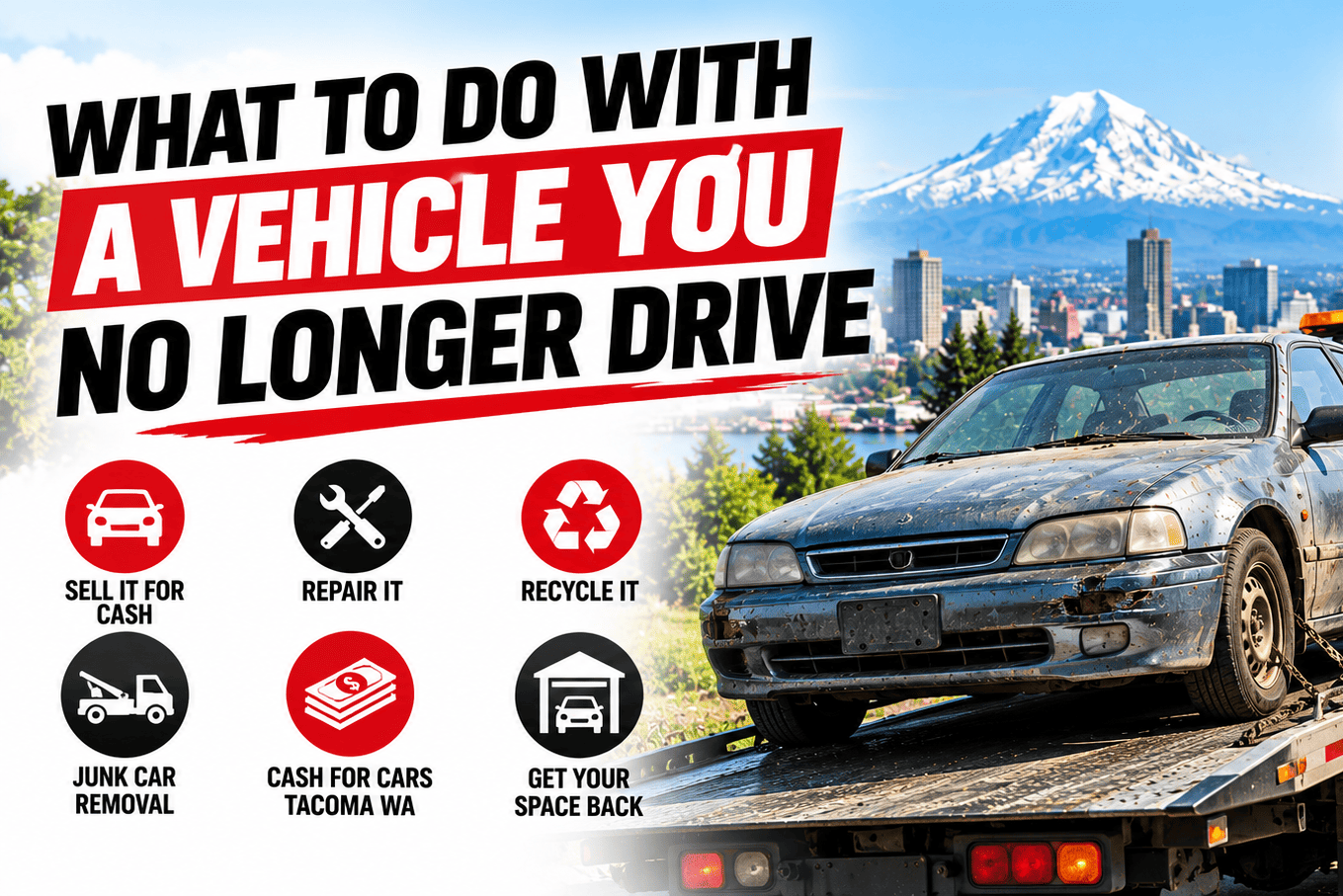
Having a vehicle you no longer drive can seem harmless at first. Maybe it was replaced by a newer car, stopped being reliable, became too expensive to maintain, or simply hasn't been needed for a long time.
But an unused vehicle still takes up space and can gradually deteriorate. Instead of allowing it to sit indefinitely, you have several options depending on its condition, value, and your plans.
If you're considering junk car removal, cash for cars, or searching for cash for cars Tacoma WA, understanding your options can help you make the right decision.
Before deciding what to do, ask yourself a simple question: Why am I still keeping this vehicle?
There may be a genuine reason. Perhaps you're planning to restore it, someone in the family intends to use it, or you're waiting for the right time to sell it.
But if the answer is simply, "I haven't decided what to do with it," the vehicle may continue sitting for another year without any real purpose.
Understanding why you're keeping it can make the next decision easier.
Take an honest look at the vehicle's current condition.
Consider:
A car that only needs minor maintenance may be worth keeping. A vehicle requiring major mechanical work may deserve a different approach.
Keeping the vehicle can make sense if you expect to use it again and it remains reasonably economical to maintain.
However, an unused car isn't completely maintenance-free.
Batteries can lose their charge, tires can deteriorate, fluids can age, and moisture can contribute to corrosion. Outdoor storage can expose the vehicle to additional weather-related wear.
If you're keeping a car for the future, make sure you have a realistic reason and plan for it.
Sometimes a vehicle isn't being driven simply because it needs repairs.
If the car has sentimental value or is otherwise worth restoring, getting a repair estimate can help you determine whether bringing it back to life makes financial sense.
Compare the estimated repair costs with the vehicle's potential value and your expected future use.
A relatively inexpensive repair may be worthwhile. A major engine, transmission, electrical, or structural repair may tell a different story.
If the vehicle is still in reasonable condition and can be driven, selling it privately or through a conventional vehicle buyer may be an option.
This approach may make sense when the car has:
However, preparing a vehicle for a traditional sale can require cleaning, repairs, advertising, answering inquiries, arranging inspections, and negotiating with potential buyers.
If you don't want to go through a traditional private sale, cash for cars can be another option to consider.
The vehicle doesn't necessarily have to be perfect. Depending on the buyer and the vehicle, old, damaged, high-mileage, or non-running cars may still have potential value.
Factors that can affect an offer may include:
If you're searching for cash for cars Tacoma WA, providing accurate information about the vehicle can help make the evaluation process easier.
Some vehicles have reached the point where repairing or selling them as traditional used cars isn't practical.
That's where junk car removal may be worth considering.
It can be a useful option for vehicles that are:
Instead of continuing to store a vehicle you don't need, removal can help clear the space and give the car an opportunity for parts recovery or recycling.
A non-running vehicle isn't automatically worthless.
It may still contain usable parts, recyclable metal, or components that have value depending on the vehicle's make, model, condition, and demand.
If the car cannot be safely driven, don't attempt to move it yourself simply to sell it. A vehicle removal service may be able to handle transportation as part of the process.
One factor people often overlook is the value of the space occupied by an unwanted vehicle.
An unused car can take up:
If you aren't going to drive the vehicle again, that space could potentially be used for something much more useful.
Sometimes removing the vehicle isn't only about the money. It's also about getting your space back.
Before selling or removing a vehicle, inspect it carefully.
Check places such as:
Old vehicles can contain documents, tools, sunglasses, electronics, and other items that owners forgot were there.
Take everything you want before the vehicle leaves your property.
Having the appropriate paperwork ready can make the process smoother.
Depending on your situation, this may include the vehicle title and other relevant ownership documents.
If you're unsure about the paperwork required for your specific vehicle, check the applicable Washington requirements before completing the transaction.
One of the easiest things to do with an unwanted vehicle is nothing.
You may tell yourself you'll repair it next month, sell it when prices improve, or decide what to do later.
Meanwhile, the vehicle continues aging.
If you already know you aren't going to use the car, comparing your options now can be more productive than allowing it to sit for another year.
A simple comparison can help:
There isn't one solution that works for every vehicle.
A vehicle you no longer drive doesn't have to remain parked indefinitely.
Depending on its condition, you may decide to keep it, repair it, sell it, explore cash for cars, or arrange junk car removal.
For Tacoma vehicle owners searching for cash for cars Tacoma WA, evaluating the vehicle's age, condition, repair costs, and potential value can help determine the most practical next step.
Before allowing an unwanted car to occupy your driveway for another year, take a closer look at your options. The right decision can help you recover space, reduce ongoing costs, and move on from a vehicle you no longer need.

