Posted By: T-Town Transport LLC
21 September, 2026
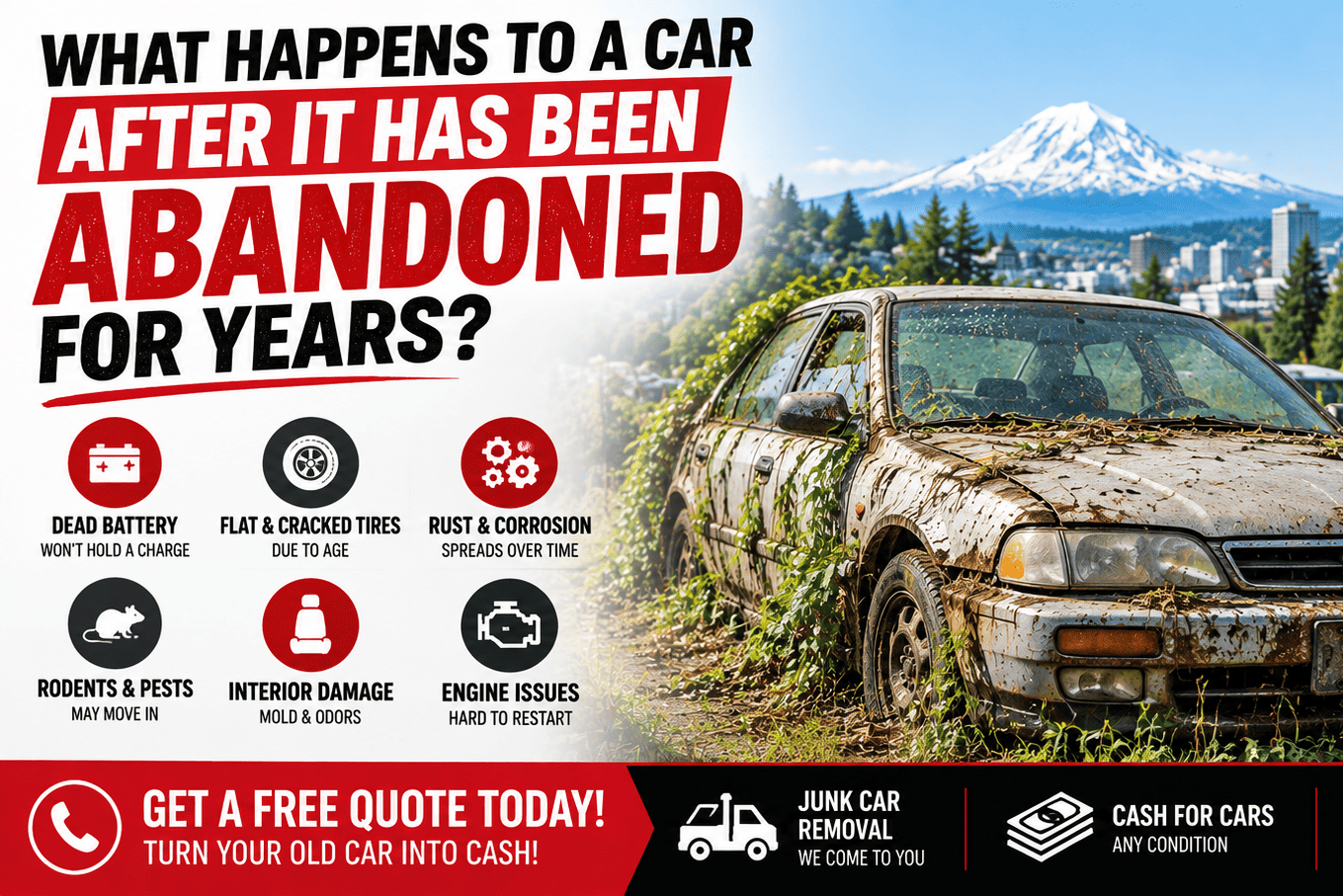
An abandoned car can look like nothing more than an old vehicle taking up space. But after sitting unused for several years, a car can go through significant changes. Tires deteriorate, batteries fail, fluids break down, rust spreads, and components that once worked reliably can become difficult or expensive to restore.
For Tacoma vehicle owners, an abandoned car may eventually become more than an eyesore. It can occupy valuable driveway or garage space, create maintenance concerns, and become increasingly difficult to put back on the road.
So, what actually happens to a car after it has been sitting unused for years?
A vehicle battery is designed to provide power for starting and operating the car, but it does not last indefinitely when a vehicle sits unused.
After prolonged inactivity, the battery can lose its charge and eventually become unable to hold one. A battery that has been sitting for years will generally need attention before the vehicle can even be evaluated properly.
However, replacing the battery does not necessarily mean the car is ready to drive. Other systems may have deteriorated during the same period.
It may seem logical that tires should remain in good condition because the vehicle has not been driven. Unfortunately, tires can deteriorate simply from age and prolonged exposure to the elements.
A car that has remained parked for years may have:
This means an abandoned vehicle may require more than a jump-start before it can safely move.
Vehicles rely on several fluids to operate properly, including engine oil, coolant, brake fluid, and transmission fluid.
When a vehicle sits for an extended period, these fluids can deteriorate or become contaminated. Leaks may also become apparent after years of inactivity.
Before attempting to restart an abandoned vehicle, owners should consider having the major mechanical systems inspected rather than simply turning the key and hoping for the best.
One of the biggest long-term concerns for an unused vehicle is corrosion.
Moisture can contribute to rust on the body, undercarriage, brake components, exhaust system, and other metal parts. Vehicles stored outdoors can be particularly exposed to changing weather conditions.
Once corrosion becomes extensive, restoring the vehicle can require considerable time and expense.
A vehicle that remains untouched for years can become an attractive shelter for rodents and other pests.
Animals may build nests inside the engine compartment, cabin, or other protected areas. Wiring and insulation can also become targets for chewing.
This type of damage can be difficult to spot from outside the vehicle, making an inspection important before attempting to start or drive a long-abandoned car.
The outside of an abandoned vehicle often gets most of the attention, but the interior can suffer as well.
Sunlight, humidity, moisture, leaks, and poor ventilation can affect seats, carpeting, dashboards, door panels, and other interior materials.
If water has entered the vehicle, unpleasant odors and mold may also become concerns.
An engine that has not operated for years should not automatically be assumed to be completely unusable.
However, prolonged inactivity can create mechanical challenges. Oil may no longer provide the same protection, seals can deteriorate, and internal components may require inspection before the engine is restarted.
Trying to start an engine that has been sitting for years without checking its condition could potentially cause additional damage.
Yes, an old or non-running vehicle can still have potential value.
The condition of the vehicle, make and model, age, available parts, metal content, and demand for components can all influence what the vehicle may be worth.
A car does not necessarily have to be running to have value. Some vehicles may be suitable for parts recovery, recycling, repair, or other forms of reuse.
That is why it can be useful to evaluate the vehicle before simply assuming it belongs in the trash.
If a vehicle has been sitting for years and restoring it would require more money than the owner wants to invest, junk car removal may be worth considering.
This can be especially practical when the vehicle is:
Professional vehicle removal can help owners clear unwanted cars without trying to make the vehicle road-ready first.
Tacoma owners with long-abandoned vehicles can also explore cash for cars options.
A vehicle does not necessarily need to be in perfect condition to have value. Its age, condition, parts, materials, and overall market demand can all influence an offer.
If you're searching for cash for cars Tacoma WA, provide accurate information about the vehicle. Mention whether it runs, how long it has been sitting, whether it has major damage, and whether important components are missing.
Clear information can make the evaluation process easier.
Before arranging removal, take a few minutes to prepare.
Gather the title and other relevant paperwork if available.
Look inside the glove box, trunk, center console, and other storage areas.
Take clear photos of the exterior, interior, tires, engine area, and any visible damage.
A car that has been sitting for years may not be safe to operate. Avoid driving it until its condition has been properly assessed.
Depending on the vehicle's condition, you may consider repairing it, selling it, recycling it, or arranging junk car removal.
It can be tempting to continue postponing the decision.
Maybe the car will be repaired someday. Maybe someone in the family will need it. Maybe its condition will not change much.
But a vehicle that has already been sitting for years may continue to deteriorate while taking up valuable space.
The longer it remains exposed to weather and inactivity, the more potential problems may develop.
An abandoned car does not simply remain frozen in the condition it was left in. Over time, its battery, tires, fluids, mechanical components, electrical systems, interior, and body can all experience deterioration.
That does not necessarily mean the vehicle has no value.
For Tacoma owners, understanding the car's current condition can help determine whether restoring it makes sense or whether junk car removal is a more practical solution.
Those exploring cash for cars Tacoma WA options can also have the vehicle evaluated based on its condition and remaining value.
If an old vehicle has been sitting untouched for years, the first step is to find out what it is still worth and what options are available before letting it occupy your property for another year.

