Posted By: T-Town Transport LLC
27 August, 2026
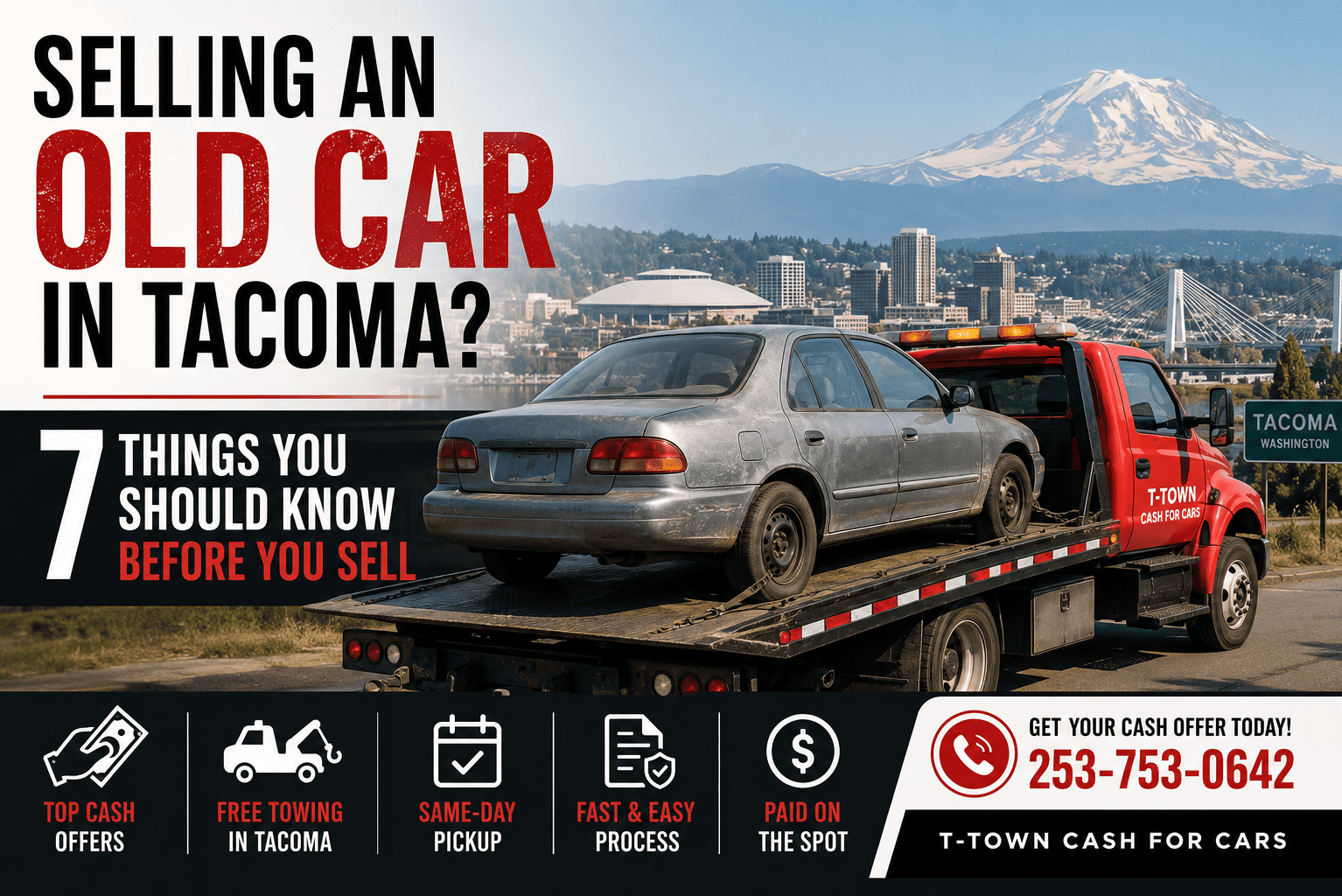
Selling an old car in Tacoma can be easier than many owners expect, but getting the process right takes a little preparation. Whether your vehicle still runs, needs expensive repairs, or has reached the end of its useful life, understanding your options can help you avoid unnecessary delays and make a better decision.
If you're searching for sell my car Tacoma, cash for cars, or junk car removal the first step is to determine what kind of buyer and selling method makes the most sense for your vehicle.
Here are seven important things Tacoma car owners should know before selling an old car.
Before accepting the first offer, take a realistic look at your vehicle's condition.
An older car isn't automatically a junk car. A vehicle with a working engine, good transmission, clean interior, and decent body condition may still have value as a used vehicle. On the other hand, a car that doesn't run, needs major repairs, or has extensive damage may be more valuable to a junk car buyer or auto recycler than to a traditional private buyer.
Consider the following factors:
Don't spend hundreds or thousands of dollars repairing an old vehicle simply because you think repairs will automatically increase its selling price. Compare the expected repair cost with the vehicle's potential increase in value first.
For an older vehicle with major problems, selling it as-is can sometimes be the more practical option.
One of the biggest decisions is choosing how you want to sell the car.
A private sale can make sense if your vehicle is in reasonable condition and you are willing to advertise it, answer messages, schedule appointments, negotiate with buyers, and complete the paperwork.
However, selling privately can take time.
If you want a simpler process, cash for cars services may be worth considering. These buyers typically evaluate the vehicle based on its condition, age, demand, and potential resale, recycling, or parts value.
For an unwanted vehicle that is no longer worth repairing, selling directly to a junk car buyer can eliminate many of the challenges associated with finding a private buyer.
The right option depends on your priorities. If maximizing the private-party sale price is your main goal and you have time, a private sale may work. If convenience and a faster transaction matter more, a cash buyer may be a better fit.
A car that won't start isn't necessarily worthless.
Mechanical failure is one of the most common reasons owners decide to get rid of older vehicles. Problems such as a failed transmission, blown engine, electrical issues, or extensive damage can make traditional repairs financially unrealistic.
That doesn't mean the vehicle has no value.
Non-running vehicles may still have value because of usable components, recyclable materials, or other parts. This is where junk car removal can become useful.
Instead of paying to have an unwanted vehicle sit in your driveway, you can contact a local buyer and ask whether they purchase non-running or damaged cars.
Before agreeing to anything, ask how the vehicle will be evaluated and whether towing or pickup is included in the offer.
Paperwork is one of the most important parts of selling a vehicle in Washington.
Before selling your old car, make sure you have the necessary ownership documents available. If you've lost your title, you may need to obtain a replacement or determine whether another acceptable document can be used for your specific situation.
When selling your vehicle, make sure the ownership information is correct and that all required owners sign the appropriate documents.
If your vehicle has a salvage title or has been declared a total loss, additional requirements may apply. Take the time to understand the paperwork before completing the transaction.
If you're unsure about your title or ownership documents, checking with the Washington Department of Licensing or a vehicle licensing office can help you understand what is required.
Selling the vehicle isn't necessarily the final step.
Washington requires sellers to take care of the appropriate Report of Sale process after transferring ownership. Completing this step is important because it helps establish that you are no longer responsible for the vehicle after the sale.
When completing the sale, keep copies of important documents and transaction information for your records.
You should also remove your license plates when appropriate and take all personal belongings out of the vehicle before handing it over to the buyer.
Check the current Washington Department of Licensing requirements for the exact steps that apply to your vehicle and transaction.
Even if you're selling an old or damaged vehicle, spending a little time preparing it can make the transaction easier.
Start by removing personal belongings. Check the glove box, center console, trunk, under the seats, and storage compartments. Don't forget items such as registration documents, insurance paperwork, parking passes, tools, and electronic devices.
If the vehicle is still drivable, gather useful documents such as maintenance records, receipts, and keys.
You don't necessarily need to detail a junk car or spend money making cosmetic repairs. Instead, focus on making the vehicle easy to inspect and transfer.
If the car doesn't run, tell the buyer beforehand. This helps ensure the correct equipment is available for pickup and prevents surprises.
A high-looking offer isn't always the best deal if additional costs come out of your pocket.
When comparing cash for cars options in Tacoma, ask:
For example, an offer that appears slightly higher may not be as attractive if you have to pay for towing yourself.
A transparent offer should make it reasonably clear what you will receive and what services are included.
For vehicles that are severely damaged, inoperable, or simply no longer worth keeping, junk car removal can be a convenient alternative to leaving the vehicle unused.
If you're arranging removal from private property, make sure you're working with a legitimate buyer, recycler, or towing company and that the ownership paperwork is handled properly.
Before scheduling pickup, confirm the vehicle's location, condition, title status, and whether towing is included. This can help make the removal process smoother and reduce the possibility of unexpected charges.
Selling an old car in Tacoma doesn't have to be complicated. The key is understanding your vehicle's condition, choosing the right selling method, preparing your paperwork, and knowing what happens after the sale.
If you're searching for “sell my car Tacoma,” don't assume you need to repair everything before getting an offer. If the vehicle is damaged or no longer running, cash for cars and junk car removal may provide practical alternatives to a traditional private sale.
Most importantly, take care of the ownership paperwork and Washington's required sale-reporting steps. A little preparation before handing over the vehicle can make the entire selling process smoother and help you move on from an unwanted car with confidence.
Whether your old car is sitting in your driveway, parked at a property, or no longer safe to drive, knowing your options can help you make an informed decision instead of rushing into the first offer.

