

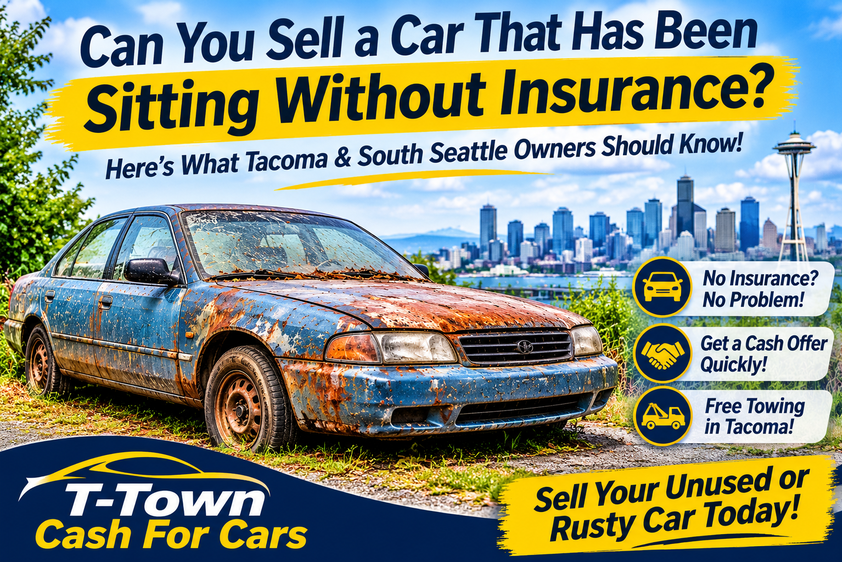
Have you ever had a car sitting in your driveway, garage, or backyard for months without insurance? Maybe you bought another vehicle, started working from home, or simply stopped driving your older car. Whatever the reason, an unused vehicle can quickly become something you no longer want to maintain.
One common question among vehicle owners is whether they can sell a car that has been sitting without insurance. The good news is that a car does not necessarily need active insurance to be sold. However, there are a few important things to understand before arranging a sale.
Whether you have an older sedan in Tacoma, a non-running vehicle in Seattle, or a rusty car that has been parked for years, you may still have options. If you are planning to sell an unused car in Tacoma, understanding the paperwork, vehicle condition, and selling process can help you make a more informed decision.
1. Does a Car Need Insurance Before You Can Sell It?
In most situations, you do not need to purchase a new insurance policy just to sell a vehicle that has been sitting unused.
Car insurance generally protects you against financial losses when you own and operate a vehicle. If your car has been parked on private property and you have not been driving it, you may have decided to cancel or discontinue coverage.
However, insurance requirements and vehicle registration requirements are not exactly the same thing.
In Washington State, drivers must generally maintain the required liability insurance when operating a vehicle on public roads. If you plan to drive your unused car to a dealership or buyer, make sure it meets the applicable insurance, registration, and road-use requirements.
If the vehicle is not insured, arranging pickup or towing is often a more practical option than driving it yourself.
The important point is that a lack of active insurance does not automatically prevent you from selling your car.
2. What Happens When a Car Sits Without Insurance for a Long Time?
Leaving a vehicle unused for several months or years can affect its overall condition. Even if it is parked safely, certain components may deteriorate over time.
Here are some common problems that can develop:
- Battery Problems: A car battery gradually loses its charge when a vehicle is not driven. After sitting for a long period, the battery may become completely discharged or fail to hold a charge.
- Tire Damage: Tires can lose air pressure, develop flat spots, or show signs of cracking when a vehicle remains stationary for too long.
- Rust and Corrosion: Moisture, rain, and exposure to changing weather conditions can cause rust to develop on the body, undercarriage, and other metal components.
- Fluid Deterioration: Engine oil, brake fluid, coolant, and other fluids may require inspection or replacement before the vehicle can safely return to the road.
- Brake Problems: Brake components can develop surface rust, corrosion, or sticking issues after extended periods without use.
These problems do not necessarily mean your vehicle has no value. Some buyers may be interested in cars that need repairs, have mechanical problems, or are no longer suitable for everyday driving.
3. Can You Sell an Unused Car Without Renewing Its Insurance?
Yes, in many cases, you can sell an unused vehicle without purchasing another insurance policy.
If your car has been sitting in your driveway for a year or longer, you might be wondering whether you should spend money getting it ready for sale.
Before paying for insurance, repairs, or other expenses, consider how you actually plan to sell the vehicle.
- If you plan to sell privately, you may need to arrange transportation if the car cannot legally or safely be driven.
- If you are selling to a dealership, ask whether they accept non-running vehicles and offer pickup.
- If you are contacting a junk car buyer, ask whether they purchase vehicles without active insurance and provide towing.
For someone looking to sell an unused car in Tacoma, arranging a sale with a buyer who accepts parked or non-running vehicles can save time and unnecessary expenses.
You should always confirm the buyer's requirements before scheduling pickup.
4. What Documents Do You Need to Sell a Car That Has Been Sitting?
Even if your vehicle has not been driven for a long time, the ownership paperwork remains important.
In Washington, the vehicle title is generally the primary document used to establish ownership and complete a private vehicle sale.
Before contacting a buyer, check the following:
- Vehicle Title: Make sure you have the vehicle's title and that the ownership information is correct. If there is an outstanding lien, you may need to resolve it before transferring ownership.
- Valid Identification: Keep your identification available because the buyer may need to verify your identity during the transaction.
- Vehicle Information: Know the vehicle's year, make, model, and approximate mileage. This information helps buyers understand what they are purchasing.
- Bill of Sale: A bill of sale can document the transaction, including the sale price, vehicle details, and date of sale.
- Title Transfer: Complete the required title assignment and transfer steps according to Washington State Department of Licensing requirements.
Washington also has specific rules for reporting a vehicle sale. Sellers should submit a Report of Sale within five calendar days of selling the vehicle.
If you have misplaced the title, do not assume that you cannot sell your car. Ask the Washington State Department of Licensing about the replacement-title process and confirm what documentation a potential buyer will accept.
5. Is an Uninsured Car Worth Anything If It Has Been Sitting for Years?
Absolutely. A vehicle does not automatically lose all its value simply because it has been sitting without insurance.
Its potential value depends on several factors, including:
- Make and Model: Some vehicles have greater demand for replacement parts or salvageable components.
- Year: Older vehicles may have limited resale value, but certain models can still be desirable.
- Mechanical Condition: A car with a working engine and transmission may attract different offers than one that does not start.
- Exterior Condition: Dents, scratches, paint damage, and rust can influence the vehicle's condition assessment.
- Missing Parts: Missing wheels, catalytic converters, batteries, or other components can affect its potential value.
- Location: The vehicle's location and accessibility can influence transportation and towing arrangements.
If you are researching cash for cars in Tacoma, it is worth contacting a few buyers and providing accurate details about your vehicle.
You do not necessarily need to repair every problem before requesting an offer. In some situations, selling the vehicle in its current condition may be more practical than investing additional money in repairs.
6. Can You Sell a Rusty Car That Has Been Parked Outside?
Yes. Rust does not automatically make a vehicle impossible to sell.
Cars that sit outside for extended periods may experience corrosion because of moisture, dirt, rain, and changing weather conditions.
In areas around Tacoma and South Seattle, older vehicles exposed to wet weather may develop rust on their doors, wheel wells, frames, and undercarriages.
The severity of the rust matters.
- Surface Rust: This usually affects the outer metal surface. Depending on the vehicle's overall condition, it may have a limited impact on its potential resale value.
- Structural Rust: More serious corrosion can affect important components such as the frame or supporting metal structures. This may make the vehicle unsafe to drive and reduce its value.
- Extensive Body Rust: Heavy corrosion, holes in body panels, and damaged sections can make traditional resale more difficult.
If you want to sell a rusty car in South Seattle, be honest about the visible damage when requesting an offer. Providing clear photographs and describing the vehicle's condition can help buyers determine whether they are interested.
You may find buyers who are willing to purchase rusty, damaged, or non-running vehicles without requiring you to restore them first.
7. Should You Repair an Unused Car Before Selling It?
One of the biggest mistakes vehicle owners make is spending money on repairs before finding out what their car is actually worth.
Imagine that your vehicle has been sitting in the driveway for two years. The battery is dead, the tires are worn, and the engine has not been started in months.
You might consider replacing the battery, purchasing new tires, changing the fluids, and fixing mechanical problems.
However, these expenses can quickly add up.
Before investing in repairs, consider these questions:
- How much would the necessary repairs cost?
- Is the vehicle still worth repairing?
- Will the repairs significantly increase the selling price?
- Can you find a buyer who accepts vehicles in their current condition?
Sometimes, selling the vehicle as-is makes more financial sense.
A cash car buyer may be interested in purchasing vehicles that need mechanical work, have cosmetic damage, or have been sitting unused for an extended period.
You can compare an as-is offer with your estimated repair expenses before deciding what to do.
8. How to Sell a Car That Has Been Sitting Without Insurance
If you have decided that keeping your unused vehicle is no longer worthwhile, the selling process does not have to be complicated.
Here are a few practical steps to follow:
Step 1: Check Your Vehicle's Condition
Start by checking the exterior, tires, battery, and visible mechanical components. You do not need to make the vehicle roadworthy just to request a selling estimate.
Step 2: Gather Basic Vehicle Information
Write down the year, make, model, mileage, and general condition. Mention whether the vehicle starts, whether it has been sitting for months or years, and whether it has noticeable rust or damage.
Step 3: Check Your Ownership Documents
Locate your vehicle title and verify that the ownership information is accurate. If you have lost the title, check the replacement process with the Washington State Department of Licensing.
Step 4: Contact Potential Buyers
Compare offers from private buyers, dealerships, and cash car buyers. Ask whether they accept uninsured, non-running, or damaged vehicles.
Step 5: Arrange Pickup
If your vehicle does not have insurance or is not safe to drive, ask about towing or vehicle pickup. This can help you avoid driving an uninsured vehicle on public roads.
Step 6: Complete the Sale Properly
Sign the title as required, remove your personal belongings and license plates, and complete the necessary ownership transfer paperwork. Remember to submit your Report of Sale to Washington DOL within five calendar days.
Following these steps can make it easier to sell an unused vehicle without spending unnecessary money getting it back on the road.
9. Why Selling an Unused Car May Be Better Than Keeping It
Keeping an old vehicle that you rarely or never use can create ongoing expenses and responsibilities.
Even when a car is parked, it takes up valuable space and may gradually deteriorate.
Here are a few reasons why selling could be a practical decision:
- Avoid Future Repair Expenses: A vehicle that has been sitting for years may require expensive repairs before it can be driven again.
- Free Up Parking Space: Selling an unwanted car gives you more room in your driveway, garage, or yard.
- Reduce Maintenance Concerns: You no longer need to worry about a deteriorating battery, aging tires, or worsening rust on a vehicle you do not use.
- Get Value From an Unwanted Vehicle: Even if your car is old, damaged, or non-running, it may still have resale or salvage value.
- Make a Simple Financial Decision: Instead of continuously investing in a vehicle you no longer need, you can compare a selling offer with the cost of keeping it.
For many Tacoma and South Seattle vehicle owners, selling an unused car can be a more convenient option than allowing it to sit for another year.
10. Why Consider a Cash Car Buyer in Tacoma or South Seattle?
Selling an unused vehicle privately can take time. You may need to create advertisements, respond to inquiries, arrange inspections, and negotiate with potential buyers.
A cash car buyer may offer a simpler alternative, particularly if your vehicle is no longer running or has visible damage.
When researching cash for cars in Tacoma, consider buyers who:
- Accept older and unwanted vehicles.
- Purchase cars with mechanical problems.
- Consider vehicles with rust and exterior damage.
- Offer vehicle pickup or towing arrangements.
- Explain their offers and payment process clearly.
- Help you understand the paperwork required for the transaction.
If your vehicle has been sitting without insurance, mention that when contacting a buyer. Also explain whether it starts, whether it has a valid title, and whether it can be accessed easily for pickup.
If you are located in South Seattle and want to sell a rusty car, you can also ask whether the buyer accepts vehicles in their current condition.
The goal is to find a convenient selling option without putting additional money into a vehicle you no longer plan to drive.
Frequently Asked Questions (FAQs)
1. Can I sell my car if I canceled its insurance?
Yes. A vehicle does not generally need an active insurance policy simply to be sold. However, you should arrange appropriate transportation if the vehicle is uninsured and needs to be moved.
2. Can I sell a car that has not been driven for two years?
Yes. You can generally sell a legally owned vehicle even if it has been sitting unused for two years. Its condition, ownership documents, and potential value will determine the selling process.
3. Do I need to renew my car registration before selling it in Washington?
Not necessarily. Washington DOL allows owners to sell vehicles with expired registration, provided the ownership requirements are met. You should not drive an uninsured vehicle on public roads simply because you intend to sell it.
4. Can I sell a rusty car that does not start?
Yes. Some buyers purchase rusty and non-running vehicles for parts, recycling, or repair. The offer will depend on the vehicle's condition, components, and other factors.
5. Should I buy insurance again before selling my unused vehicle?
Not necessarily. If you are selling the car without driving it, you may not need to purchase another policy. If you intend to drive it, check the applicable insurance and registration requirements first.
6. Can I sell my car without fixing its mechanical problems?
Yes. Some cash car buyers purchase vehicles with engine problems, dead batteries, transmission issues, and other mechanical damage. Always disclose known problems when requesting an offer.
7. What if I lost the title to my unused car?
You should contact the Washington State Department of Licensing to learn how to obtain a replacement title. Buyers generally need the appropriate ownership documentation to complete the transaction.
Conclusion
A car that has been sitting without insurance for months or even years does not automatically become impossible to sell. Whether it has a dead battery, rusty body panels, mechanical problems, or expired registration, you may still have an opportunity to find a buyer.
Before spending money on repairs or purchasing another insurance policy, consider the vehicle's current condition and explore your selling options.
If you want to sell an unused car in Tacoma or sell a rusty car in South Seattle, getting an offer for your vehicle in its current condition can be a practical first step.
T-Town Cash For Cars helps vehicle owners explore convenient options for selling unwanted cars. Instead of letting an unused vehicle continue taking up space, consider finding out what it could be worth today.
Contact T-Town Cash For Cars to discuss your vehicle and explore your selling options.